Welcome to Ontario Professional Association of Osteopathic Medicine
Osteopathic manipulative medicine
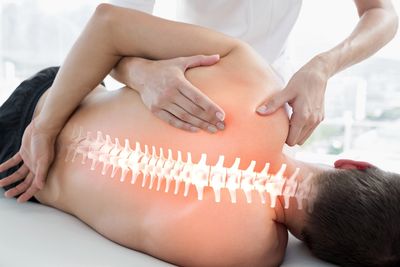
Osteopathic manipulative medicine (abbreviated as OMM) is an approach to manual therapy, a form of therapy that uses physical contact, used to improve the impaired or altered function of the musculoskeletal system (somatic dysfunction) and is a form of complementary medicine. With roots in ancient Greek "frictions", manual manipulation has long been a part of health care. In 1864, Andrew Taylor Still, M.D., D.O.[1], The founder of modern osteopathic medicine became dissatisfied with traditional medicine's offerings after his father and 3 children died from meningitis. He began incorporating manual medicine into his existing medical practices with debatable success. As a military surgeon, Still established credibility for manual manipulation in certain situations, sometimes achieving better outcomes than his peers.
There are different techniques applied to the musculoskeletal system as OMM. These techniques can be applied to the joints, their surrounding soft tissues, muscles, and fasciae.
Also, OMM is a treatment that is intended to be used in conjunction with mainstream treatments where it is deemed appropriate. It is rarely used as a primary treatment regimen unless the D.O. is absolutely certain that the patient's problems are a result of a musculoskeletal somatic dysfunction. Furthermore, as with other medical treatment methodologies, there are certain situations where use of OMM is strictly contraindicated (for example, cervical spine HVLA techniques may never be used on patients with Down Syndrome).[citation needed]
While this OMM practice is traditionally ascribed to D.O.'s, it should also be noted that there are M.D. practitioners of OMM since many Osteopathic medical schools have created training programs for their M.D. counterparts. Recently, OMM training programs have likewise been extended to other medical professionals, including, but not limited to: Physician Assistants, Nurse Practitioners, Nurses, etc.
Some techniques used in OMM are:
- Balanced ligamentous tension (BLT)
- Counterstrain
- Cranial osteopathy
- High-velocity low-amplitude thrust (HVLAT)
- Joint mobilization – articulatory techniques
- Lymphatic pump
- Muscle energy technique (MET)
- Myofascial release
- Neuromuscular therapy, trigger point therapy or myodysneuric point therapy
- Soft tissue technique
- Visceral manipulation
It is probably the comprehensive and eclectic style of OMM that distinguishes it most from that employed by most other manual therapists. The immediate goal of musculoskeletal manipulation is to restore maximal, pain-free movement of the musculoskeletal system in postural balance.